Use the warning as the start of an investigation, not a shortcut to a parts purchase.
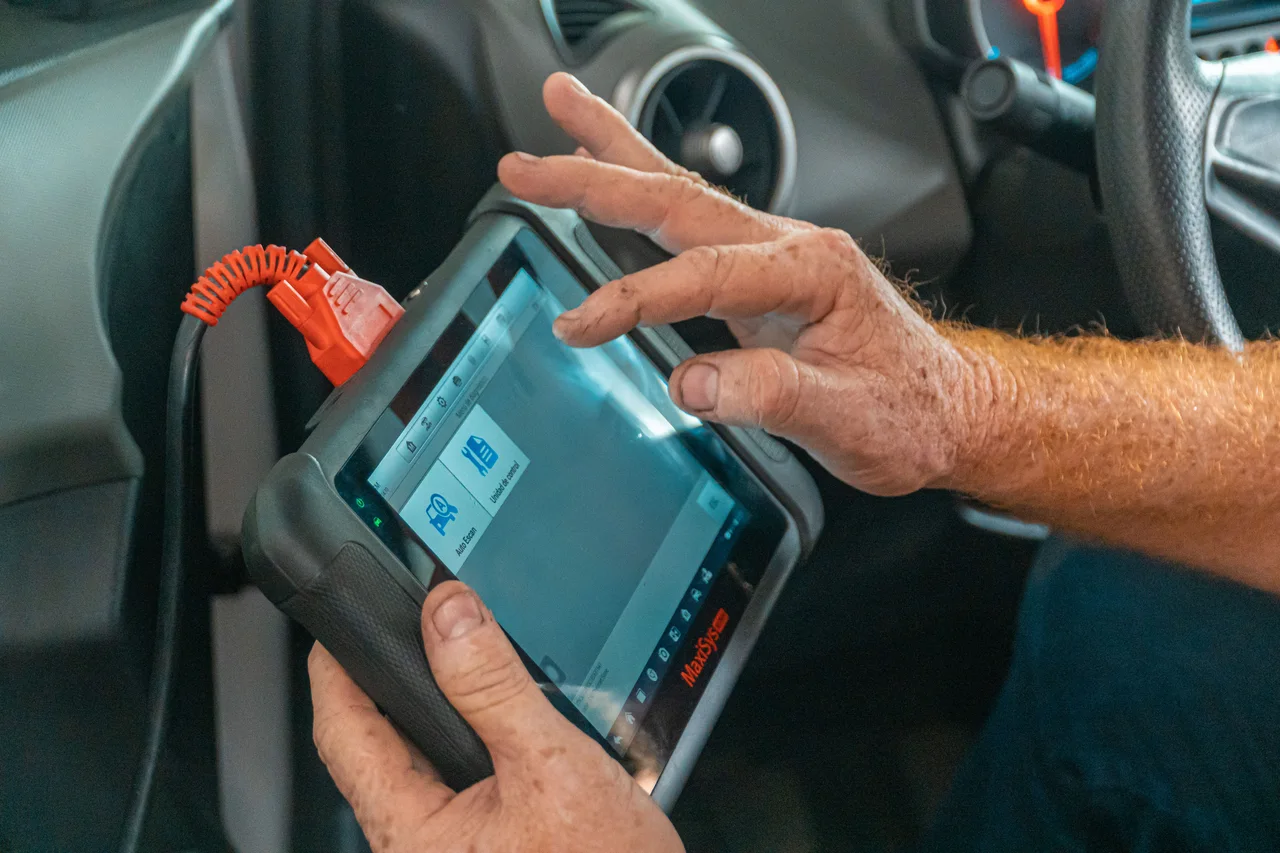
A check-engine light can have several causes. We read the vehicle’s diagnostic information and test the affected system to determine what it needs.
The check-engine light reports that the vehicle detected a condition requiring attention. It does not identify a single failed part by itself. Stored codes, operating information and relevant tests help connect the warning to its cause so the next step is based on findings rather than the name of a code.
What codes, freeze-frame data and readiness can tell you
The engine-management system monitors inputs and operation related to performance and emissions. When its criteria are met, it may store a diagnostic trouble code and illuminate the check-engine light. The code describes a detected condition, such as an unexpected mixture or misfire; it does not automatically prove that the component named in a description needs replacement.
Some faults also store a snapshot of operating conditions, often called freeze-frame data. Readiness monitors indicate whether particular self-checks have completed. Codes, snapshots and monitor status answer different questions, so all may provide useful context. What is available depends on the vehicle and fault, and some checks run only under specified operating conditions.
Signs it’s time for a closer look.
- Check-engine light is on
- Rough running or poor fuel economy
- A light returns after being cleared
A flashing light or severe power loss needs prompt attention. Stop safely and contact the shop.
The light is steady but the vehicle feels normal
Some detected conditions produce little obvious change in driving behavior. That does not establish their cause or significance. Arrange an evaluation and share recent refueling, maintenance or battery work. The exact warning, stored information and current symptoms guide the next step.
The light flashes or the engine runs severely rough
A flashing check-engine light can accompany a misfire that risks exhaust-system damage. Do not keep driving to see whether it clears. Stop in a safe place, follow the owner’s manual and contact the shop or roadside assistance about safe transport, particularly with severe shaking or power loss.
The warning returns after being cleared
Erasing a code does not correct the condition that triggered it. A returning light may appear only when the relevant self-check runs again. Tell the shop who cleared it, whether any repair was performed and approximately when it came back; that sequence can help guide diagnosis.
What an inspection may cover.
The checks depend on your vehicle and symptoms. Your shop will confirm the diagnostic scope before work begins.
Stored codes & context
Diagnostic information may show what the vehicle detected and the conditions around that event. Multiple codes can be related rather than separate failures.
Operating behavior
Rough running, starting trouble or changes in fuel economy add context. A light with no noticeable symptom still requires evaluation.
Targeted system checks
The reported fault guides testing of the relevant air, fuel, ignition, emissions or electrical system. The exact procedure depends on the vehicle.
Repair and service options.
Your vehicle may need one of these services, a combination, or a different repair. Inspection helps determine the right next step.
Repair the confirmed cause
The appropriate work might involve a connection, leak, component or mechanical concern. A code description alone is not sufficient evidence to select a part.
Separate maintenance from repair
Overdue service may be relevant, but it should not be presented as the proven fix without supporting findings. Ask what each recommended item addresses.
Check operation afterward
The recheck should suit the diagnosed fault. Some monitoring requires particular operating conditions, so an immediate cleared light is not the whole verification process.
Understanding your options.
A sensor report versus a failed sensor
A sensor may correctly report a problem elsewhere, such as an air leak or unexpected combustion behavior. Ask how the test findings distinguish the reporting component from the condition it observed. A code containing a sensor name should not be the only explanation for replacing it.
One underlying fault versus several separate repairs
Several codes can result from a common electrical, air, fuel or mechanical issue. The diagnostic sequence should account for their relationship and the vehicle’s symptoms. Ask which fault is considered primary and what evidence supports any additional repair rather than treating the code list as a shopping list.
A successful repair versus an immediate cleared display
Verification depends on the identified fault. The engine may need to reach appropriate operating conditions before a relevant monitor can complete. Ask what was confirmed and whether anything remains to be observed during normal operation; an extinguished lamp immediately after clearing codes is not the entire result.
What affects cost and timing?
- The system reporting the fault and testing needed to identify its cause
- Component access and required parts
- Whether several codes share one cause or need separate investigation
How long will it take?
Some faults can be evaluated consistently; others depend on temperature, load or a monitoring cycle. Ask about the initial diagnostic scope and what would require a further update.
Before your visit.
- Record whether the light is steady or flashing and describe any change in performance.
- Mention recent refueling, service, battery disconnection or code clearing.
- Bring previous code reports without assuming the listed component needs replacement.
After the service: what to understand and monitor.
- Retain the diagnosed cause, relevant codes and repair information. This helps distinguish the original condition from an unrelated future warning.
- Follow any vehicle-specific follow-up guidance. Do not use an arbitrary online driving routine in place of the manufacturer’s requirements or drive a vehicle with unsafe symptoms.
- Report a returning light with its timing and any performance change. If it flashes or the engine runs severely rough, stop safely and seek transport guidance.
About check-engine-light diagnostics.
Can you tell me the repair from the code number?
A code helps identify the system or condition to investigate. Several causes can produce similar codes, so relevant testing is needed before a repair recommendation.
What if the light turns off by itself?
The condition may be intermittent. Useful diagnostic information may remain, so tell the shop when the warning appeared and whether the vehicle behaved differently.
Should I clear the light before my visit?
Tell the shop about the warning before clearing information. Erasing codes or disconnecting the battery can remove useful context and may reset readiness monitors.
Is the check-engine light the same as an oil-pressure warning?
No. Warning symbols refer to different systems and can require different responses. Identify the exact symbol using the owner’s manual and contact the shop about the concern.
What is freeze-frame data used for?
It can preserve a snapshot of operating details, such as engine speed, load or coolant temperature, when a fault was recorded. That context may help connect a warning to the conditions that triggered it. Available information varies, and a snapshot still needs to be considered alongside symptoms and diagnostic tests.
What does “not ready” mean on a scan report?
It generally means a particular self-check has not completed. It may still need the required operating conditions, or its status may have been reset by code clearing or a battery disconnection. Readiness is different from a confirmed repair; the vehicle’s requirements and any remaining faults determine the next step.
Can a refueling-related warning still need diagnosis?
Yes. The timing is useful context, but it does not prove the fuel cap or any other part is the cause. Depending on the vehicle, the concern may involve the evaporative-emissions system or another issue. Share the sequence and let testing establish the repair.
Talk with your local PAC team.
Choose the shop you plan to visit for check-engine-light diagnostics. Share your vehicle year, make, model and the concern you’re noticing so the team can confirm the appropriate evaluation, vehicle compatibility and availability. Pasadena has two PAC locations; use the street name to reach the right team.
Understand the work before you approve it.
Talk through the findings, estimate and next steps with your PAC team. Ask which repairs qualify for the nationwide 2-year/24,000-mile warranty and review the coverage terms.
Explore warranty coverage